

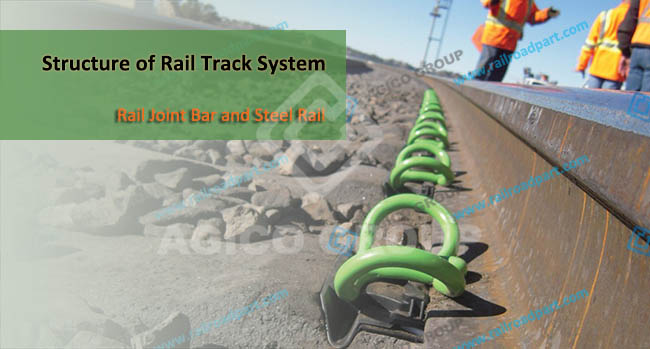
What is the Structure of Railway Track System
The railway track is an abbreviation of the railway track system, and is also called a railway line, a rail track, etc. The railway Track is generally composed of two parallel rails-2 rails fixed on the sleepers, and a large number of gravels under the sleepers. Rail fastener parts units steel rails and rail sleepers together, the main parts are elastic rail clips, track bolts, tie plate, rail pad, rail joint bar, fish bolt, etc. Rail Sleeper is an important part of the railway track system. It is often referred to as wood sleeper or a rail sleeper. Its main function is to share the weight of rails and trains, reduce the pressure on the roadbed, and also to fix the rails and maintain the gauge. The role of gravel (also known as road slag, ballast, ballast bed) is also obvious. It can increase the elasticity of the track and improve the drainage function of the railway.
Railway Track-Rail in History
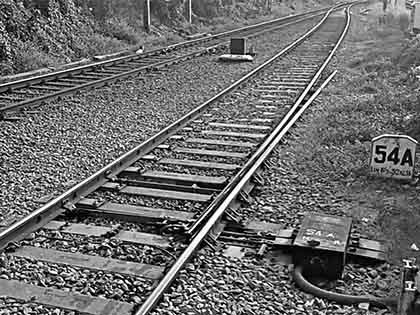
Early days rails were not made of steel (steel was probably a rare material at the time), but mainly wooden rails, with only a thin layer of iron wrapped around the rails. Although the construction cost of such rails is low, the bearing capacity is very limited and it will not be worthwhile from the long-term interests. With the development of railway construction, from wooden rails to steel rails, and later decades of development, steel materials with superior bearing properties were used.
Common Steel Rail Grades of Today
The cost of railroad construction engineering materials occupies a large part of the steel rails. The common rail section is in the shape of "I", the I-shaped steel in the mouth of the industry. The surface of the upper part that contacts the train wheel becomes the head of the rail, the part of the lower part that is in close contact with the sleeper is called the rail bottom, and the middle part is the rail waist. Different railway lines have different requirements for rail performance, such as its strength, stability, wear resistance and other parameters.

| Standard | Sepc. | Material Typical Grade |
|---|---|---|
| UIC860 | UIC54 | 700,900A,900B |
| UIC60 | ||
| EN13674.1 | 50E1 | R200,R350HT,R260Mn,R35LHT,R320Cr,R370CrHT |
| 54E1 | ||
| 60E1 | ||
| 60E2 | ||
| BS-11-1985 | BS80A | 700,900A,900B |
| BS90A | ||
| BS100A | ||
| AREMA | 115RE | SS,HH,LA,IH |
| 136RE | ||
| ASCE60 | U71Mn | |
| ASCE85 | U71Mn | |
| GB 2585-2007 | 50kg/m |
U71Mn U75V |
| 60kg/m | ||
| 75kg/m | ||
| TB/T2344-2012 | 50kg/m |
U71Mn,U75V,U77MnCr U78CrV |
| 60kg/m | ||
| 75kg/m | ||
| GB 11264-1989 | 8kg/m | Q235 |
| 12kg/m | Q235 | |
| 15kg/m | 55Q, Q235 | |
| 18kg/m | 55Q, Q235 | |
| 22kg/m | 55Q, Q235 | |
| 24kg/m | 55Q, Q235 | |
| 30kg/m | 55Q, Q235 | |
| 38kg/m | 50Mn, U71Mn | |
| 43kg/m | 50Mn, U71Mn | |
| GB Crane rails | QU70 | U71Mn |
| QU80 | U71Mn | |
| QU100 | U71Mn | |
| QU120 | U71Mn |
In the industry, rails are divided into different specifications based on these properties. The rails used in railroad track laying are mainly determined by cost and technology. Our common form of specification is kg/m, meaning the weight of a rail per meter of length. The larger the value, the greater its load bearing capacity. The specifications of rails produced in China are: 43kg/m, 50kg/m, 60kg/m, and 70kg/m.
Rail Joint Methods-Welding and None Welding
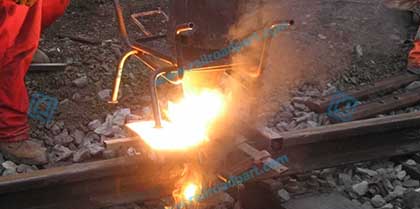 Steel Rail Thermal Welding
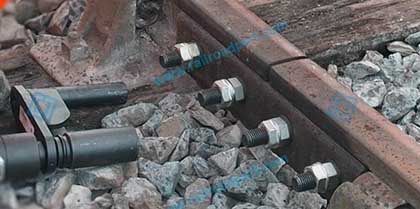 Fishplate Installation
Rail Joint Bar(Fishplate)-Key Rail connection Components
A steel rail is about 20 meters, and the rail track is composed of numerous rails, so the rails need to be connected. There are two ways to connect: The joints between the rails are connected using fishplates. The fishplate is a steel plate about 60 cm in length, and each of the two sections has four or six steel bolts for inserting elliptical holes in the rails. With 6mm wide expansion joints between the rails and oval holes, the rails can expand and contract with changes in outside temperature.
This is very important for rail safety. If the extension is limited, each temperature change will bring 1.6 tons of pressure or tension to the rail. If a place has a temperature difference of 30 degrees a year, it will bring up to 50 tons to the rail. The pressure or pulling force, in this case, the steel rails are easily deformed, affecting the safety of train operations. In order to meet the need for thermal expansion and contraction of the rails, the seams left on the rails will cause noises in the train to run, causing passengers to feel unsteady. Steel Rails of this type of connection are not suitable for high-speed trains and are generally used on low-speed lines, non-essential lines or branch lines.
Continuous Welding-Seamless Rail or Long Rail
Another rail connection method is Continuous Welded Rail (CWR). Such rails are also called seamless rails or long rails. The method is to connect steel rails of several thousand meters in length by welding. There are no joints between the rails, and the strength of the rails is increased, which also reduces the maintenance workload. The train operation no longer has the noise of “squeak and squeak” and greatly reduces The rail track's friction with the train is smoother and faster. It is suitable for the needs of high-speed rail construction. How to solve the problem of cold shrinkage and thermal expansion of rails? Rails are stretched before laying (simulated thermal expansion), and the method of locking the temperature of a railway track is calculated based on the local maximum and minimum temperatures, so that the expansion pressure of the local temperature-increasing rails will decrease in the future. At the same time, the rails are fixed on the reinforced concrete sleepers, which limits their freedom of telescoping.


