

Composite Sleepers for Sale
GFU composite sleepers combine a rigid foamed urethane body with continuous glass-fiber reinforcement for rail projects where corrosion resistance, electrical insulation and project-specific geometry are important.
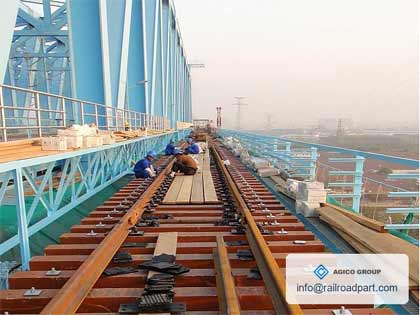
Product Name: GFU Composite Sleeper
Construction: Rigid foamed urethane with continuous glass-fiber reinforcement
Typical Applications: Bridge track, turnouts, crossings and special trackwork
Project Options: Custom dimensions, rail seats, fastener holes and grooves
System Integration: Fastening and rail-seat details reviewed against the approved drawing
Technical Review: Drawings, quantity, application conditions and required tests confirmed before proposal
Product image note: Bridge-track geometry follows the approved drawing.
Share the sleeper drawing, rail profile, fastening details and application conditions for a focused technical proposal.
What Is a GFU Composite Sleeper?
A GFU composite sleeper is a molded and reinforced alternative to conventional timber or concrete sleeper solutions. Continuous glass-fiber reinforcement supports structural stiffness, while the polyurethane-based matrix provides a non-metallic, moisture-resistant body for railway environments.
The product can be specified for replacement, rehabilitation and new-build work where conventional sleeper material or section geometry is not a good fit.
The sleeper, rail and fastening system must be treated as one engineering interface. The final design should confirm rail profile, gauge, rail-seat position, fastener type, screw-spike or bolt layout, pad arrangement, insulation requirement, adjustment range and installation clearance. A fastening assembly should not be selected or substituted solely from a general product illustration.
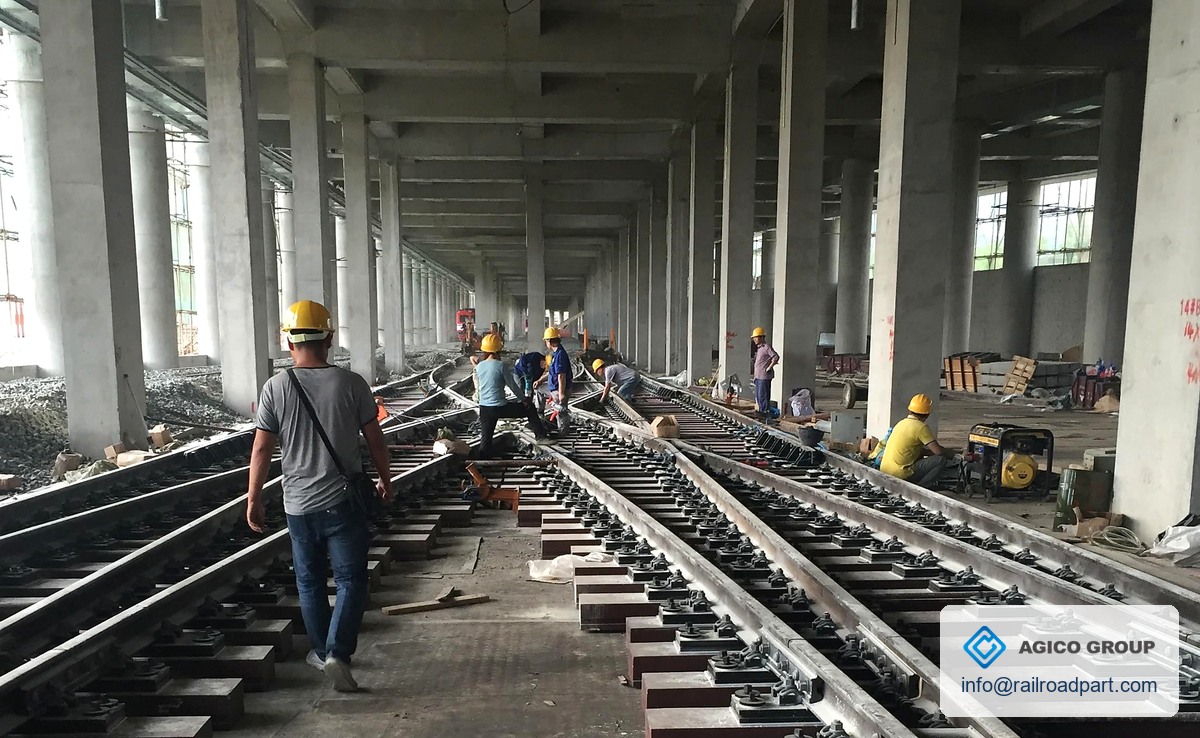
Sleeper and fastening interface in track.
GFU Composite Sleeper Applications
GFU composite sleepers can be specified for bridge track, turnouts, crossings, transition areas and other locations where project-specific geometry and non-metallic material properties are required.
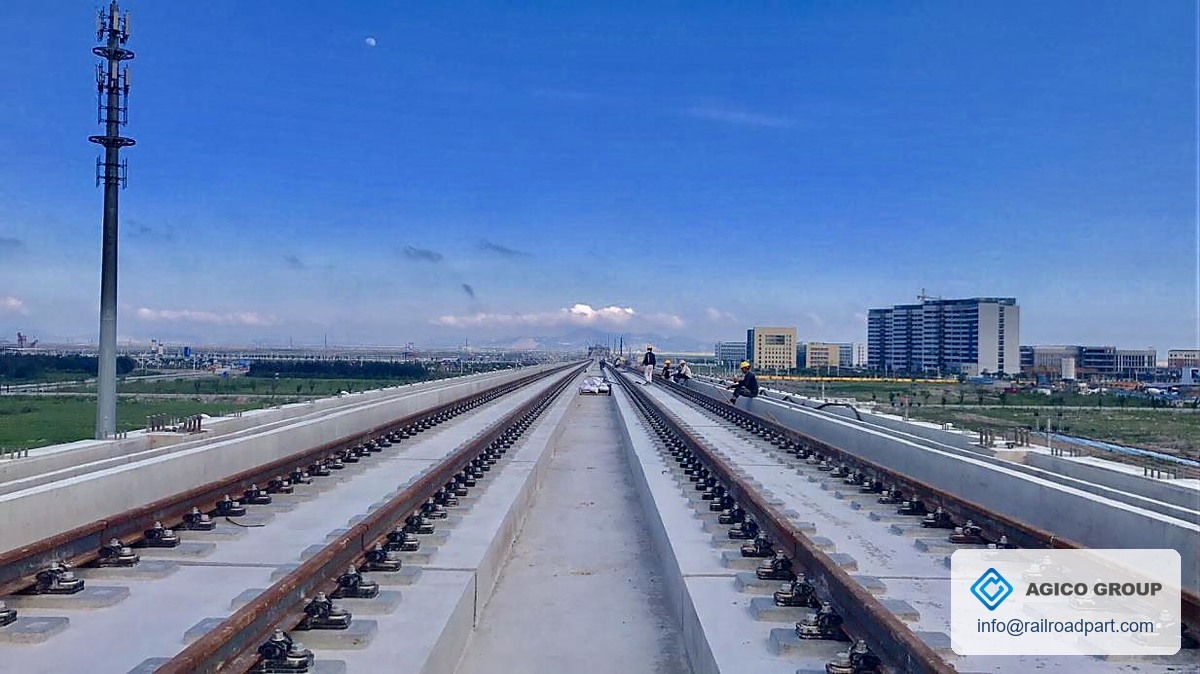
Bridge-track image note: Bridge application with project-specific interfaces.
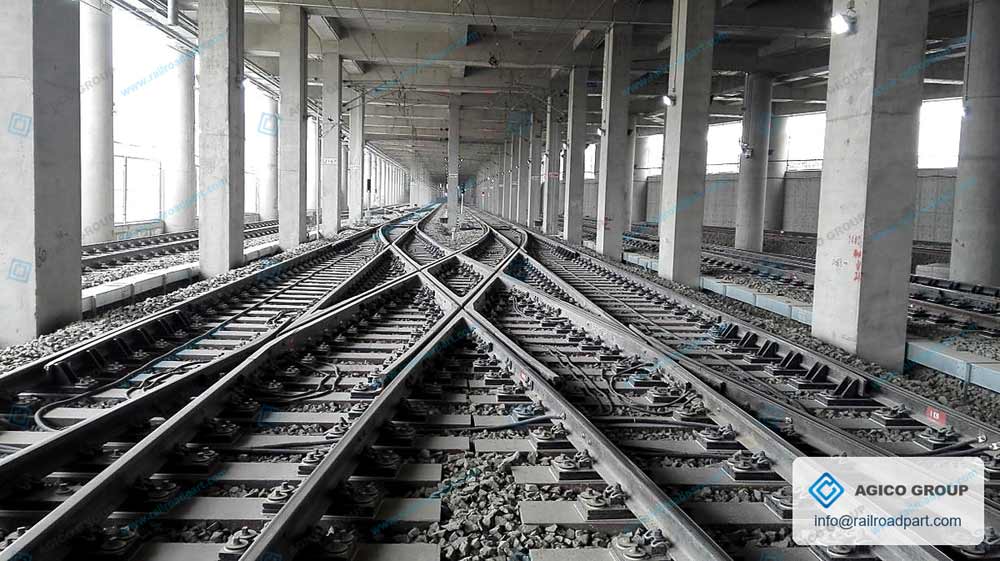
Turnout image note: Layout matched to the approved turnout design.
- Project Fit: Rail-seat arrangement, fastening holes and dimensions reviewed against the drawing
- Bridge track: A lower-weight sleeper option for bridge decks and structures where handling and track-system integration need close attention.
- Turnout areas: Custom lengths, hole positions and machining can support complex turnout layouts and special trackwork interfaces.
- Metro and urban rail: Suitable for rail transit projects that require defined stiffness, insulation and fastening interfaces.
- Mainline and heavy-haul renewal: Can be evaluated for replacement and rehabilitation work subject to engineering verification of load and fatigue requirements.
- Maintenance access areas: Field machining and repair options can support controlled on-site adjustment when permitted by the project specification.
GFU Composite Sleeper Advantages
- Continuous glass-fiber reinforcement for a rigid composite section
- Moisture and corrosion resistance for exposed rail environments
- Electrical insulation properties for relevant track-system requirements
- Machinable after molding for drilling, grooving and rail-seat preparation
- Customizable dimensions and hole patterns based on approved drawings
- Suitable for use with compatible rail fastening systems
GFU Composite Sleeper Custom Dimensions and Machining
Each project can require a different sleeper length, width, height, rail-seat arrangement or fastening-hole pattern. Supply requirements should be confirmed against rail profile, fastening system, track gauge, support conditions and local installation practice.
Where required, sleepers may be prepared for field drilling or controlled machining. Please provide drawings, dimensions, quantity and application conditions for a technical review.
| Requirement | Information List |
|---|---|
| Sleeper size | Overall length, width, height and section drawing |
| Rail interface | Rail profile, rail-seat inclination and gauge requirement |
| Fastening interface | Fastener model, hole pattern, screw-spike or bolt arrangement and required torque data |
| Machining | Side grooves, top drilling, cable or drainage provisions, and special geometry |
| Operating conditions | Bridge, turnout, metro, mainline, maintenance or replacement application |
| Verification | Applicable standard, load case, inspection scope and required documentation |
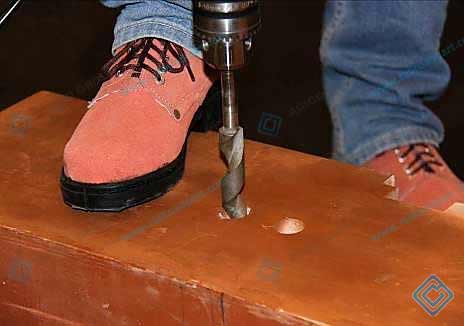
Field-drilling: Hole positions follow the approved layout.
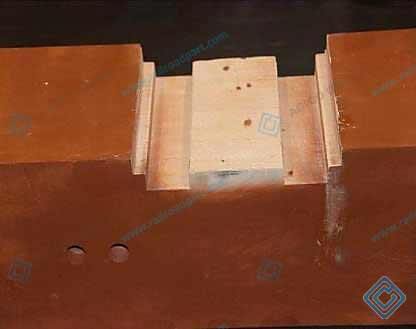
Machining: Grooves and holes suit the nominated system.
GFU Composite Sleeper Performance Verification
Technical evaluation may be arranged to match the proposed application and agreed project requirements.
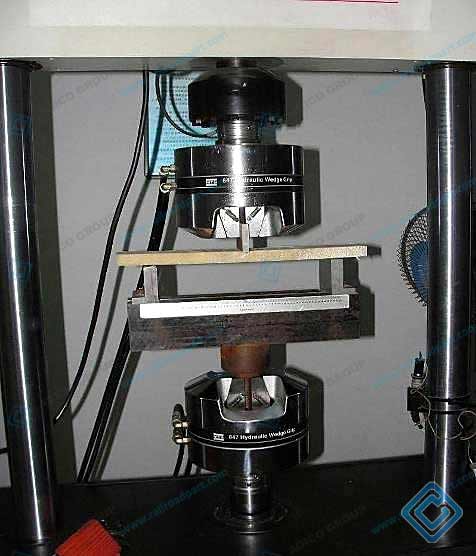
Bending-test image note: Typical setup for agreed evaluation.
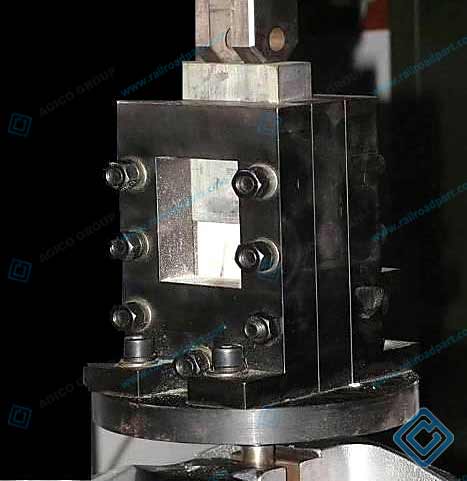
Fixture image note: Controlled fixture for the agreed test scope.
- Bending performance: Bending strength, bending resistance, centre bending and rail-seat bending evaluation.
- Fastener retention: Spike and screw pull-out evaluation for new or repaired sleeper locations.
- Fatigue performance: Cyclic loading and fatigue assessment appropriate to the intended operating duty.
- System resistance: Longitudinal and lateral resistance assessment for the assembled track interface.
- Material and inspection checks: Dimensional inspection and other project-defined quality checks.
Technical Support: Documentation and test information prepared for the stated application
GFU Composite Sleeper Maintenance and Repair Support
For relevant renewal work, repair material can be considered where re-drilling or local feature restoration is required. The proposed repair method should be reviewed against the site condition and project requirements.
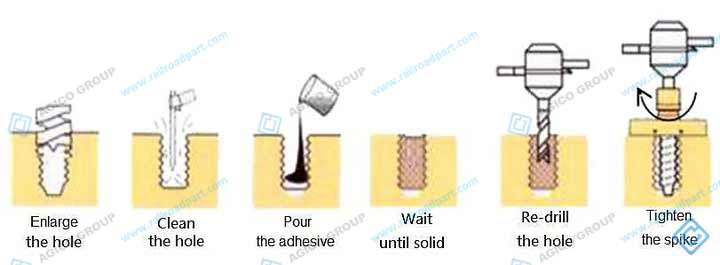
Repair-material image note: For reviewed local re-drilling or restoration.
Request a GFU Composite Sleeper Technical Proposal
Send your drawing or project requirements to receive a focused proposal for GFU composite sleepers, machining options and compatible fastening details.
Information Needed for a GFU Composite Sleeper Proposal
- Sleeper drawing or required dimensions
- Rail profile, gauge and fastening-system details
- Bridge, turnout or general track application
- Required quantity and delivery location
- Any specified tests, standards or installation constraints


